
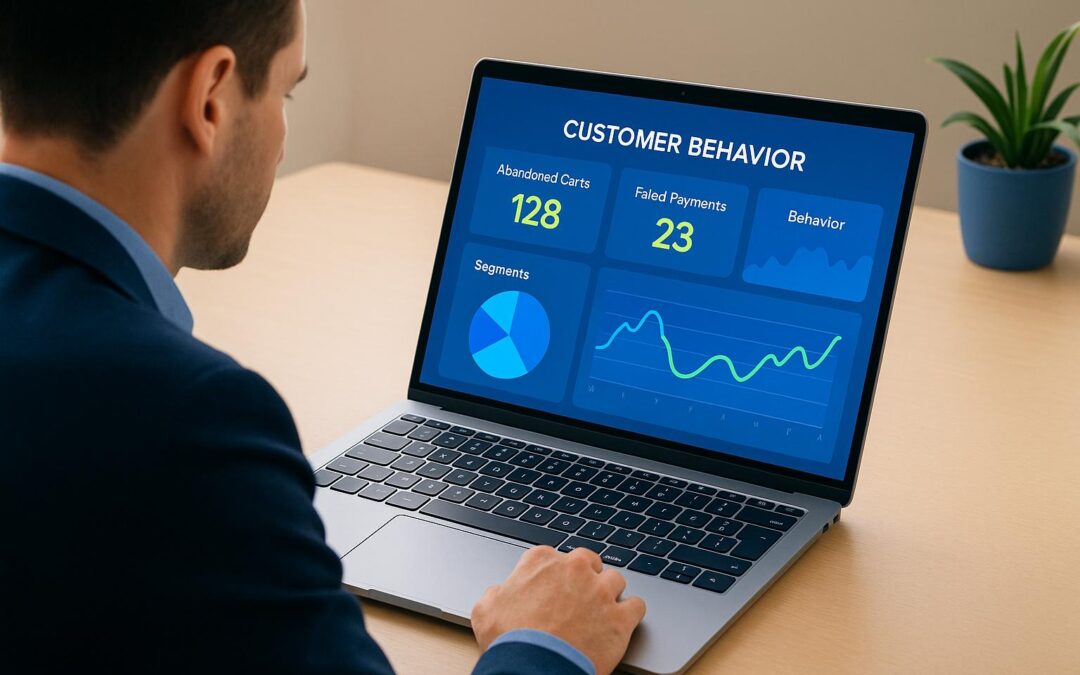
Revenue loss happens when your business misses out on income due to issues like abandoned carts, failed payments, or customer churn. Traditional financial reports often overlook these gaps. The solution? Customer behavior data. By analyzing how customers interact with your website, emails, and payment systems, you can identify where revenue is slipping away and take action to recover it.
Key Takeaways:
- Identify Problem Areas: Use data to find where customers drop off, such as during checkout or after 30 days of inactivity.
- Segment Customers: Group customers by behavior (e.g., "high-value at-risk") to create targeted strategies.
- Automated Triggers: Set up behavior-based follow-ups for issues like cart abandonment or payment failures.
- Predictive Analytics: Spot patterns that signal potential churn and intervene early.
- AI Solutions: Tools like Unselfish AI automate outreach and recovery, saving time and boosting results.
By leveraging customer behavior insights, businesses can recover lost revenue, retain customers, and improve long-term profitability.
Connecting Customer Behavior to Revenue Loss
Customer Journey Stages and Revenue Impact
Every stage of the customer journey – from the first moment they hear about your brand to their post-purchase experience – can lead to revenue slipping through the cracks. For instance, at the awareness stage, data can reveal how potential customers interact with your content. During the purchase phase, abandoned carts or payment issues often highlight obstacles. In the retention stage, a drop in engagement can signal a growing risk of customer churn. Post-purchase, fewer interactions may indicate missed opportunities to drive repeat business or upsell. Mapping out these stages in detail helps identify where to collect data and uncover actionable insights.
Where to Collect Customer Behavior Data
To understand customer behavior fully, pull data from multiple sources like website analytics, CRM systems, payment processors, and communication platforms. For example:
- Website analytics track clicks and page views, helping you spot where engagement drops off.
- CRM systems provide insights into changes in purchasing habits over time.
- Payment processors highlight transaction issues that might disrupt sales.
- Email platforms show how customers respond to your communications.
By integrating these data points, you can create a unified view of customer behavior. This makes it easier to identify friction points that could lead to lost revenue.
Focusing on High-Impact Behaviors
Pay close attention to behaviors that have a direct impact on revenue, such as abandoned carts or payment failures. These issues are clear indicators of obstacles in the buying process. Similarly, signs of declining engagement – like fewer site visits or reduced interaction with emails – can act as early warnings of potential churn. Set specific thresholds for these behaviors so you can intervene quickly and take steps to address problems before they escalate, ultimately helping to recover lost revenue.
Turning Behavior Data into Revenue Recovery
Segmenting Customers by Behavior Patterns
Breaking down customer behavior into actionable segments is a game-changer for revenue recovery. Start by analyzing purchase recency – customers who recently bought something need a different approach compared to those who haven’t shopped in a while. Then, look at purchase frequency – regular buyers behave differently than those who only shop occasionally. Lastly, consider spending levels – your high-spending customers who suddenly stop engaging need immediate, personalized attention.
By combining these factors, you can create focused segments like "high-value at-risk customers" or "recent one-time buyers with cart abandonment." Each of these groups will respond differently to recovery strategies. You can also segment by engagement patterns, separating customers who no longer open emails from those who click but don’t purchase. This distinction allows you to fine-tune your messaging, whether it’s for re-engagement or conversion-focused outreach.
Once you’ve defined these segments, you can move on to automated responses that address potential risks as soon as they arise.
Setting Up Behavior-Based Triggers
Automated triggers are your secret weapon for tackling specific behaviors. Tailored customer segments make it easier to set up precise, behavior-based triggers.
For example, if a customer abandons their cart, you can implement a multi-channel automated response that begins within an hour. For payment failures, speed is even more critical. When a credit card declines, a quick follow-up – like an automated SMS – can encourage customers to update their payment details before they forget or turn to a competitor.
Triggers for declining engagement require a different approach. If a previously active customer hasn’t visited your site or opened recent emails, an automated re-engagement campaign can kick in. This might include a "we miss you" message, a personalized offer, or even a survey to find out why they’ve disengaged.
The secret to success is matching the urgency and communication channel to the behavior. Immediate issues like payment failures demand fast, direct outreach, while slower disengagement allows for a more measured approach. Setting clear parameters – like cart value thresholds or specific timeframes – ensures your messaging feels timely and relevant, not pushy.
Predicting Revenue Loss Before It Happens
Why wait for revenue to slip away when you can prevent it? Predictive analytics lets you spot trouble before it becomes a problem. By analyzing historical data, you can identify patterns that consistently lead to customer churn or lost sales.
For instance, a customer who reduces their order frequency, spends less per order, and stops engaging with your emails is showing multiple warning signs. While any one of these behaviors might not raise alarms, together they signal a high likelihood of churn.
Payment habits can also reveal risks. Customers who switch from annual to monthly subscriptions or delay payments compared to their usual pattern often signal trouble ahead. Recognizing these shifts early allows you to step in with tailored retention offers or proactive customer service.
Predictive models are especially helpful for seasonal businesses. If your data shows that customers who miss their usual buying window rarely return, you can launch preemptive campaigns to re-engage them before it’s too late. This shifts your focus from reacting to recovering lost revenue to actively preventing it.
The ultimate goal is to build a scoring system that ranks customers based on their risk of revenue loss. Factors like time since last purchase, engagement drops, payment issues, and spending decreases all contribute to this score. Customers who exceed a certain threshold can be funneled into automated recovery workflows before they churn. Proactive intervention ensures you don’t lose high-risk customers while maximizing your revenue recovery efforts.
Unselfish AI applies this predictive approach in its database reactivation service. By analyzing inactive leads and customers, it identifies those most likely to re-engage. This targeted focus helps businesses recover more revenue while avoiding wasted effort on low-probability prospects.
sbb-itb-3bca853
AI-Powered Revenue Recovery Solutions
Automating Customer Outreach with AI
AI takes the hassle out of manual customer outreach by constantly monitoring behavior and sending personalized messages at just the right moment. Instead of relying on staff to manually identify and contact at-risk customers, AI systems analyze behavior patterns and trigger communications as soon as specific actions – like cart abandonment – occur.
For example, when a customer leaves items in their cart, AI dives into their purchase history, browsing habits, and past interactions to craft messages that feel personal. It even determines the best time to reach out – whether that’s an hour later, six hours later, or the next day – by analyzing data from similar customer profiles.
AI also shines when it comes to re-engaging inactive customers. It reviews past product interests, email engagement, and responses to previous offers to tailor campaigns that feel relevant. Everything from the subject line to the product recommendations is fine-tuned to catch the customer’s attention without feeling pushy.
To make outreach even more effective, AI coordinates across multiple channels like SMS, email, and voice calls. If a customer tends to ignore emails but often responds to text messages, the system adjusts its approach to reach them where they’re most likely to engage. Timing and channel preferences are all taken into account, ensuring communications are as effective as possible.
Unselfish AI takes these automated strategies and applies them through targeted services designed to turn potential revenue losses into gains.
How Unselfish AI Recovers Lost Revenue
Unselfish AI uses customer behavior data to create actionable strategies for recovering lost revenue. It offers three key services: Database Reactivation, Cart Abandonment Recovery, and Voice AI Outreach.
- Database Reactivation zeroes in on leads and customers who have gone quiet. The AI analyzes inactive contacts to identify those most likely to re-engage, based on factors like past purchases, engagement levels, and recent activity. Then, AI-powered SMS bots initiate personalized conversations to re-engage customers, promote upsells, or encourage rebooking.
- Cart Abandonment Recovery addresses one of the most common revenue leaks. The system tracks when customers add items to their cart but don’t check out, then launches multi-channel campaigns to bring them back. Messages are tailored based on the customer’s history and behavior, ensuring follow-ups feel relevant and timely.
- Voice AI Outreach adds a human-like element to automated recovery efforts. It handles lead qualification calls, appointment reminders, and basic inquiries, while routing more complex cases to human team members. This is especially useful for businesses where phone interactions drive conversions.
One of the standout benefits is how quickly these systems can be up and running. Instead of waiting weeks, businesses can start recovering revenue in just a few days. The AI takes care of analyzing customer data, segmenting audiences, and personalizing outreach, all at scale.
Paying Only for Results
Traditional tools often require steep upfront costs, regardless of whether they deliver results. Unselfish AI flips this model on its head by tying costs directly to outcomes.
With this performance-based approach, you only pay when the AI successfully recovers revenue or schedules confirmed calls. For instance, if a cart abandonment campaign leads a customer to complete their purchase, you pay a percentage of that recovered sale. Similarly, if a database reactivation effort results in a booked appointment, you pay for that conversion. If the outreach doesn’t generate results, you pay nothing.
This approach eliminates the financial risk of investing in new revenue recovery systems. Businesses don’t have to justify large upfront costs or worry about ROI. Instead, costs automatically align with performance – when the AI delivers results, it earns its fee; when it doesn’t, there’s no expense.
For businesses operating on tight budgets, this model makes AI-powered revenue recovery accessible. It allows you to test the system without committing to pricey software licenses or long-term contracts. Plus, the performance-based structure ensures continuous campaign optimization. Every recovered sale or re-engaged customer translates directly into additional revenue, with no downside risk.
Measuring and Improving Revenue Recovery
Metrics That Matter for Revenue Recovery
Once you’ve implemented AI recovery tools, tracking performance becomes essential to fine-tune your strategy. Keeping an eye on the right metrics ensures your efforts are paying off.
Recovered revenue is the standout metric – it’s the total dollar amount regained from abandoned carts, re-engaged customers, or reactivated leads. This figure provides a straightforward measure of success and should be evaluated regularly – monthly, quarterly, and annually – to identify patterns and trends.
Conversion rates give insight into how many people respond to your outreach efforts. For example, in the case of abandoned carts, you’d track the percentage of those who complete their purchase after receiving a follow-up message. Similarly, for reactivation campaigns, it’s the percentage of inactive contacts who make a new purchase or book a service. If your cart emails only convert 1% of 1,000 recipients, it might be time to revisit your messaging or timing.
Churn reduction is another key indicator. It measures how well your recovery efforts retain customers. Compare churn rates before and after implementing recovery strategies. For instance, reducing churn from 15% to 10% monthly shows you’re keeping more customers engaged and active.
Understanding response times across channels can also sharpen your approach. If customers tend to reply to text messages within two hours but take two days to open emails, that data can guide your outreach strategy, helping you focus on what works best.
Lastly, customer lifetime value (CLV) for recovered customers highlights the long-term impact of your efforts. A customer who returns after abandoning a cart might become a loyal buyer, increasing their overall value far beyond the initial recovered purchase. By analyzing engagement and patterns, you can make informed decisions that drive better planning, predict churn, and prioritize product adoption or lead scoring efforts.
Following Data Privacy and Communication Rules
When handling customer data for billing and outreach, compliance with U.S. data protection laws is non-negotiable. For healthcare businesses, HIPAA outlines strict guidelines for managing patient information during billing and recovery, and violations can lead to steep penalties and lost trust.
It’s also crucial to clearly outline payment terms and conditions, especially for dealing with failed payments or overdue accounts. This transparency helps avoid misunderstandings with customers. Additionally, when contacting customers about overdue payments or abandoned purchases, ensure your practices align with the Fair Debt Collection Practices Act. This means respecting privacy, avoiding harassment, and only reaching out during appropriate hours.
Recovery campaigns must also adhere to the Federal Trade Commission Act, which prohibits deceptive advertising and requires clear disclosure of any fees or charges. For example, if you’re offering a discount to recover an abandoned cart, the terms must be straightforward and accurate. Misleading tactics can harm your reputation and lead to legal trouble.
Respecting customer communication preferences is equally important. If someone opts out of SMS messages, stop sending them immediately. Ignoring opt-outs isn’t just poor practice – it can result in regulatory penalties. Consulting legal professionals familiar with subscription and e-commerce businesses can help ensure your recovery processes comply with both local and international regulations. For global businesses, understanding the varying legal and tax requirements across countries is essential.
Taking an ethical approach also strengthens customer relationships. Offering flexible payment plans or avoiding aggressive tactics for minor debts preserves customer dignity while protecting your brand’s image.
Once compliance is in place, focus on testing and refining your strategy.
Testing and Refining Your Approach
Revenue recovery isn’t a one-and-done process – it requires constant testing and adjustment. Start by experimenting with message timing. For instance, send cart abandonment emails at intervals like one hour, six hours, and 24 hours after abandonment to determine which timing yields the best results.
Tailor your message content to different customer segments. A discount might appeal to price-sensitive shoppers, while premium customers might respond better to messaging that emphasizes quality or convenience. Use A/B testing to evaluate the effectiveness of different approaches, including timing, content, and communication channels.
Dig deeper into customer behavior to predict recovery success. For example, customers who browsed several product pages before abandoning their cart may respond well to detailed product recommendations. Meanwhile, those who left after viewing pricing might be more inclined to return with a discount code in hand. These insights allow you to create highly targeted campaigns.
As you identify what works, scale your strategies gradually while keeping compliance in mind. During testing phases, track your metrics weekly; once campaigns stabilize, shift to monthly monitoring. Look for patterns – do certain days of the week perform better? Are there seasonal dips in recovery rates? Use these observations to optimize timing and allocate resources effectively.
FAQs
How can businesses combine customer behavior data from various sources to recover lost revenue?
Businesses looking to recover lost revenue can tap into customer behavior data from various sources by leveraging tools that sync data in real-time. This ensures smooth integration across platforms and keeps customer insights current. With this data, companies can track trends, uncover opportunities, and tackle challenges such as cart abandonment or disengaged leads.
By automating data updates and consolidating information from different channels, businesses can build detailed customer profiles. These profiles pave the way for personalized outreach, helping companies connect with customers more effectively, minimize delays, and boost their revenue recovery efforts.
How can predictive analytics help reduce customer churn and recover lost revenue?
Predictive analytics plays a key role in reducing customer churn by spotting customers who might leave before they actually do. By diving into customer behavior patterns, businesses can group customers into segments, tailor their communication, and provide timely offers or support that cater to individual needs.
Automation tools take this a step further by simplifying outreach across channels like SMS, email, and voice. These tools ensure that businesses connect with customers at just the right moment. This focused strategy doesn’t just boost customer satisfaction – it also helps recover revenue that might otherwise be lost.
How can AI help businesses reconnect with inactive customers and recover lost revenue?
AI plays a key role in helping businesses reconnect with inactive customers. By analyzing behavior patterns, it can predict when customers might disengage and pinpoint the best moments for outreach. With this insight, businesses can create personalized messages that align with individual preferences, making communication more relevant and effective. AI also automates follow-ups, ensuring interactions happen at the right time without delays. On top of that, it assesses customer sentiment, giving businesses the ability to respond to emotional cues thoughtfully – ultimately boosting engagement and recovering lost revenue.